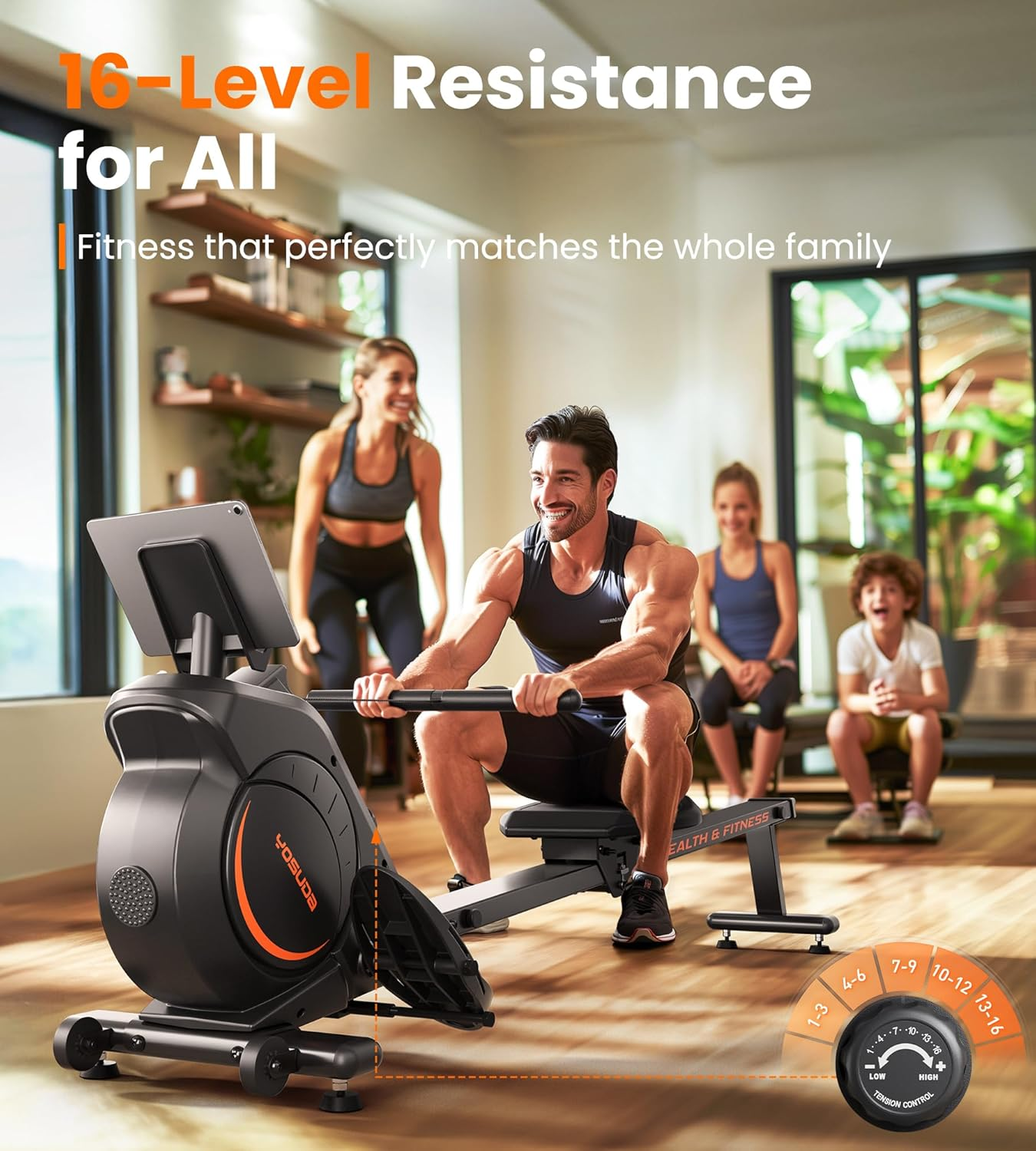
The indoor rowing machine is one of the most powerful yet underused fitness tools in modern gyms and home workout spaces. As a professional gym trainer, I recommend the indoor rowing machine to beginners, fat-loss seekers, athletes, and even seniors because it delivers full-body results with minimal joint stress.
Unlike treadmills or bikes that focus on limited muscle groups, the rowing machine activates nearly 90% of your body muscles, making it one of the most efficient cardio-strength hybrid machines available today.
In this complete guide, you’ll learn:
-
Proper indoor rowing machine technique
-
How to use an rowing machine correctly
-
Beginner and advanced indoor rowing machine workouts
-
Muscles used during rowing
-
Key benefits of indoor rowing
-
Common mistakes to avoid


Benefits of Indoor Rowing Machine
The popularity of the indoor rowing machine is growing fast—and for good reason.
1. Full-Body Workout
The indoor rowing machine works your legs, core, back, shoulders, arms, and grip in one smooth motion. Few machines offer this level of total-body engagement.
2. Low-Impact & Joint Friendly
Rowing places minimal stress on the knees, hips, and ankles, making it safer than running or jumping exercises.
3. High Calorie Burn
A high-intensity rowing machine workout can burn 500–800 calories per hour, depending on effort and body weight.
4. Improves Heart & Lung Health
Consistent rowing strengthens cardiovascular endurance and improves oxygen efficiency.
5. Builds Lean Muscle
Because rowing combines resistance with cardio, it helps develop lean, athletic muscle without bulk.
6. Improves posture, balance and coordination
You may not think about the way you carry yourself as a strength thing, but it is. Strong core and back muscles help maintain your posture and reduce pressure on your spinal column. And — while the brain is crucial to balance and coordination — so are our muscles. They help us react quickly and prevent falls.
7. Reduces stress
Catch, drive, finish, recover. Catch, drive, finish, recover. Whether you do it on the serene lake, in a quiet corner of the gym or from the comfort of your home, the repetitive nature of rowing can have a meditative effect. Add that to the stress-relieving benefits of physical activity and you’ve got yourself a natural mood booster.
8. Fits into any workout regimen
Because rowing gives you such a good cardio workout, it’s also flexible in terms of how you fit it into your routine. If you don’t want to make it a long workout as mentioned, you can do short intervals between other exercises to keep your heart rate up.
“I think that’s the appeal to rowing,” Dempers notes, “you can do it as one long workout or incorporate it into a larger routine, hopping on and off for short bursts. After you do a quick hit, you can easily switch to doing something else, like push-ups or kettlebell swings, then come right back.”
👉 For muscle-focused routines, read our article on Best Full-Body Gym Workouts.
Indoor Rowing Machine Technique (Step-by-Step)
Correct rowing machine technique is essential for results and injury prevention. Each rowing stroke has four phases.
1. Catch Position
-
Knees bent
-
Shins nearly vertical
-
Arms extended
-
Back straight
-
Core engaged
2. Drive Phase
-
Push through your heels first
-
Extend legs powerfully
-
Lean back slightly
-
Pull handle toward lower ribs
Sequence: Legs → Core → Arms
3. Finish Position
-
Legs straight
-
Handle near chest
-
Elbows close to body
-
Shoulders relaxed
4. Recovery Phase
-
Extend arms first
-
Lean torso forward
-
Bend knees and slide back
💡 Pro Tip: Speed comes from power, not rushing strokes.
Indoor Rowing Machine: How to Use It Correctly
Many beginners misuse the indoor rowing machine. Follow these steps to row safely and effectively.
Step 1: Adjust Foot Straps
Straps should sit across the widest part of your feet.
Step 2: Set Resistance

-
Beginners: Low to medium resistance
-
Advanced users: Medium resistance
Higher resistance does not equal better workout.
Step 3: Monitor Settings

Track:
-
Time
-
Distance
-
Strokes per minute (ideal: 18–24 SPM)
Step 4: Start Rowing
Maintain smooth rhythm and controlled breathing.
There are four basic motions in a single stroke: The catch, the drive, the finish and the recovery. Dempers breaks down the basics with a step-by-step guide to each:
- The catch: Start by sitting on the seat, with your knees bent and feet secured on the foot bar (or in straps, depending on the machine). Next, grab the handle attached to the flywheel at the front of the machine with a cable. Push yourself forward enough that your shins are nearly perpendicular to the ground and your upper body is tilted forward about 55 degrees (if you’re not sure what that looks like, think of the way 10 o’clock is positioned on a clock face).
- The drive: Push yourself back with your legs, using your core muscles to lean your body back in a smooth, controlled motion, while also pulling the handle toward your chest.
- The finish: Think of the finish as the polar opposite of the catch. Your legs are straight and fully extended. “You’re leaning slightly back. Your arms are contracting into your chest and, ultimately, down toward your solar plexus,” Dempers explains. If your torso was at 10 o’clock before, it should be at about 2 o’clock now. This may be the end of the stroke, but now it’s time to reset for the next one.
- The recovery: Glide forward, returning your knees to their starting position and extending your arms and the handle forward toward the flywheel. “It should be one fluid motion from start to finish,” Dempers adds. “And then, you repeat the motion for as long as you want your workout to be.”
Using the damper (a lever on the side of the flywheel), you can adjust the amount of airflow into the flywheel which, in turn, affects how much tension you pull. The higher the airflow, the more tension you get, which means a heavier workout.
👉 New to gym machines? Read our Beginner Gym Equipment Guide.
Indoor Rowing Machine Workout (Fat Loss & Cardio)
Here are effective rowing machine indoor workouts based on fitness goals.
Fat-Burning Workout

-
Warm-up: 5 minutes easy row
-
Row: 2 minutes moderate pace
-
Active rest: 1 minute slow row
-
Repeat: 8–10 rounds
Endurance Workout
-
20–30 minutes continuous rowing
-
Steady pace, controlled breathing
HIIT Rowing Workout
-
30 seconds fast rowing
-
90 seconds slow rowing
-
Repeat 10–12 rounds
Indoor Rowing Machine Workout for Beginners
This rowing machine workout for beginners focuses on technique and conditioning.
20-Minute Beginner Plan
Warm-up:
-
5 minutes easy rowing
Workout:
-
1 minute moderate rowing
-
1 minute rest
-
Repeat 5 times
Cool-down:
-
5 minutes slow rowing + stretching
Weekly Beginner Schedule
-
Week 1–2: 3 sessions/week
-
Week 3–4: 4 sessions/week
Increase time first, not resistance.
Indoor Rowing Machine Muscles Used
One of the biggest advantages of the indoor rowing machine is muscle activation.
Lower Body (Power Source)
-
Quadriceps
-
Hamstrings
-
Glutes
-
Calves
Core Muscles
-
Abdominals
-
Obliques
-
Lower back
Upper Body
-
Lats
-
Traps
-
Rhomboids
-
Shoulders
-
Biceps
-
Forearms
Common Indoor Rowing Machine Mistakes
Avoid these errors:
-
Rounding your lower back
-
Pulling with arms first
-
Using very high resistance
-
Rushing strokes
-
Skipping warm-ups
Correct form always beats speed.
Who Should Use an Indoor Rowing Machine?
The rowing machine is ideal for:
-
Beginners
-
Weight loss seekers
-
Athletes
-
Seniors
-
People with knee or joint issues
-
Home gym users
It adapts to every fitness level.
Indoor Rowing Machine vs Other Cardio Machines
Compared to treadmills and bikes:
-
More muscles worked
-
Lower injury risk
-
Higher calorie burn
-
Better posture improvement
That’s why many trainers prefer the indoor rowing machine.
How soon will you see results from indoor rowing machine?
Because it’s a full-body workout, the time you spend on an erg translates to visible results pretty quickly — as in within a couple of weeks of starting a consistent rowing practice.
Just be sure to set realistic goals for yourself. Fitness is a process. And if you’re new to rowing machines, it’ll take time to refine your form. Muscle develops slowly over months regardless of the kind of strength training you do. And if you’re hoping to shed a few pounds, keep in mind that the CDC says losing a maximum of two pounds a week is the healthiest and most sustainable approach to weight loss.
Patience is a virtue, but you won’t need much of it. The results you can’t see in a mirror, like increased energy and stamina, will show up quickly. So, go ahead and row, row, row your (land) boat!
Indoor Rowing Machine FAQs
❓ Is an rowing machine good for weight loss?
Yes. The indoor rowing machine burns high calories while building muscle, making it excellent for fat loss. Rowing can help you burn calories, which can lead to weight loss if accompanied by an overall caloric deficit. However, targeted fat loss is not controllable, so burning belly fat specifically will come down to factors like genetics, not the type of exercise you’re doing.
❓ How long should beginners use an indoor rowing machine?
Beginners should start with 15–20 minutes, 3–4 times per week, focusing on proper technique.
❓ Which muscles does an indoor rowing machine work?
The indoor rowing machine works legs, core, back, shoulders, arms, and grip muscles.
❓ Is rowing better than treadmill?
Rowing is lower impact, works more muscles, and burns similar or higher calories compared to treadmills.
❓ Can I use an indoor rowing machine every day?
Yes, if intensity is managed. Mix light and moderate sessions to avoid overtraining.
❓ Is indoor rowing safe for knees?
Yes. The indoor rowing machine is joint-friendly and ideal for people with knee issues.
Final Thoughts
The indoor rowing machine is one of the most effective fitness tools for full-body strength, fat loss, and cardiovascular health. With proper technique and structured workouts, it can outperform many traditional cardio machines while keeping your joints safe.
If you want a complete, time-efficient workout, the indoor rowing machine deserves a permanent place in your routine.